





15 Aug
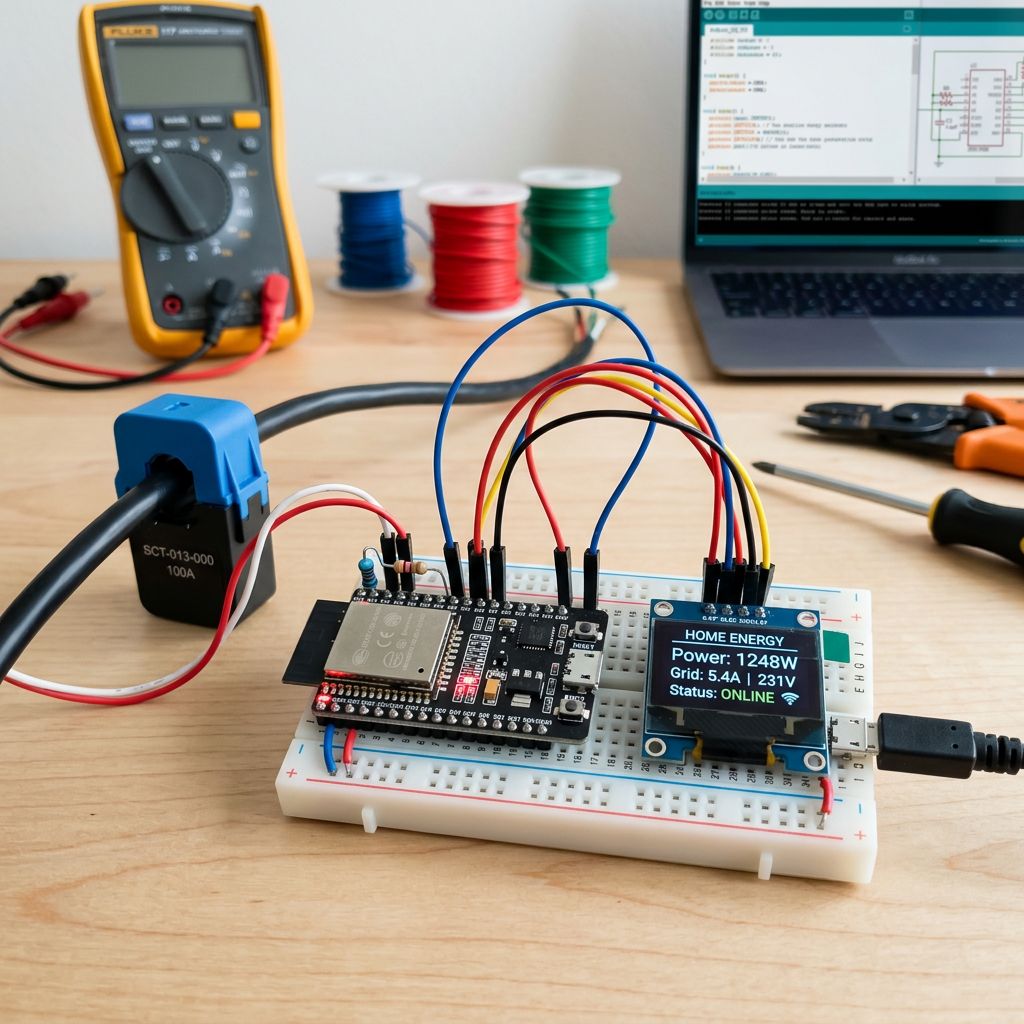
Introduction to Advanced Home Energy Monitoring System
In today's world, monitoring your home's energy consumption is crucial for optimizing utility bills and reducing carbon footprint. This advanced project utilizes an ESP32 Development Board and a 0.96 inch OLED Display I2C to provide real-time energy usage data.
Technical Specifications
| Component | Specification |
|---|---|
| ESP32 Development Board | Dual-core 32-bit CPU, Wi-Fi & Bluetooth |
| OLED Display | 0.96 inch, I2C, 128x64 pixels |
| Relay Module | 1-Channel, 5V |
How It Works
The system integrates an ESP32 Development Board for processing and connectivity, interfacing an OLED Display for visual feedback, and a Relay Module for controlling power flow.
Code Example
#include <Wire.h>
#include <Adafruit_SSD1306.h>

#define SCREEN_WIDTH 128
#define SCREEN_HEIGHT 64
Adafruit_SSD1306 display(SCREEN_WIDTH, SCREEN_HEIGHT, &Wire, -1);

void setup() {
  display.begin(SSD1306_SWITCHCAPVCC, 0x3C);
  display.display();
}

void loop() {
  display.clearDisplay();
  display.setTextSize(1);
  display.setTextColor(SSD1306_WHITE);
  display.setCursor(0,0);
  display.println("Energy Monitoring");
  display.display();
}
Comparison with Other Systems
| Feature | ESP32 & OLED System | Basic Systems |
|---|---|---|
| Real-time Monitoring | Yes | Limited |
| Cost | Moderate | Low |
| Connectivity | Wi-Fi, Bluetooth | None |
When to Use
Consider this system if you need precise energy monitoring, remote data access, and integration with smart home systems.
Troubleshooting Tips
- Ensure the ESP32 is configured correctly for Wi-Fi connectivity.
- Check OLED connections if the display is blank.
Interested in building your own energy monitoring system? Check out our ESP32 Development Board and OLED Display today!