





22 Feb
DC-DC Step Up vs Step Down – What’s the Difference?
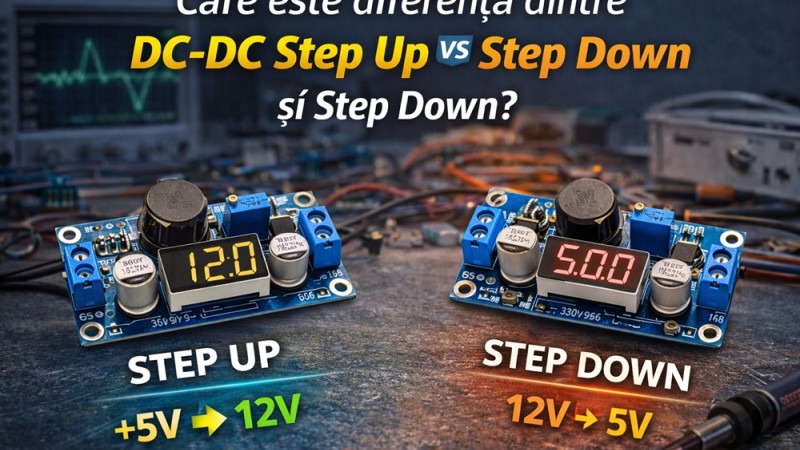
DC-DC converters are essential in modern electronic projects. They allow voltage adaptation according to circuit requirements. But what is the difference between a Step Up (Boost) and a Step Down (Buck) converter?
In short: Step Down reduces voltage (12V → 5V), Step Up increases voltage (5V → 12V).
1️⃣ What is a DC-DC Step Down (Buck) Converter?
A Step Down converter lowers input voltage to a smaller value.
- Example: 12V → 5V
- Perfect for powering Arduino from a 12V supply
- High efficiency (80–90%+)
2️⃣ What is a DC-DC Step Up (Boost) Converter?
A Step Up converter increases input voltage to a higher level.
- Example: 5V → 12V
- Useful for LED strips or motors powered from batteries
- Ideal for portable applications
3️⃣ Main Differences
| Feature | Step Down | Step Up |
|---|---|---|
| Voltage Direction | Decreases | Increases |
| Example | 12V → 5V | 5V → 12V |
| Typical Use | Arduino, ESP32 | LED, Motors |
Conclusion
Both converters are fundamental in electronics. The right choice depends on the difference between available voltage and required voltage.
Related Products
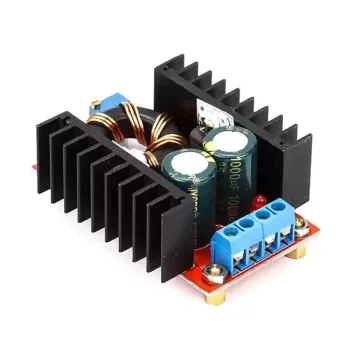
150W 12-35V DC to DC Step Up Voltage Booster RegulatorThe 150W 12-35V DC to DC Step Up Voltage Booster Regulator is a superior boost converter that ef..
14.72RON
Ex Tax:14.72RON